Recruiting panic is one of college football’s least useful renewable energy sources. It never runs out, it heats every room too quickly, and somebody always tries to plug it into a message board.
So let’s separate the signal from the siren.
Google News surfaced a choppy but useful BYU recruiting cluster this weekend: USA Today reported in its headline that 2027 four-star wide receiver Blake Wong committed to BYU, while the Deseret News framed BYU’s Bode Sparrow miss and early 2027 Big 12 recruiting standing as a fair question — time to panic in Provo? Sports Illustrated also framed BYU’s recent recruiting misses as the larger conversation.
Those are not identical data points. They should not get shoved into the same emotional blender.
The better BYU Sport Nuts read: Wong’s commitment does not erase every miss, but it gives the 2027 board exactly the kind of offensive skill-position marker BYU needed while the class is still young. The panic meter can stay below the red zone. Maybe keep it near yellow, because this is Big 12 recruiting and the oven is always on, but nobody needs to fling the spatula through the kitchen window.
What the Wong signal means
A 2027 wide receiver commitment matters for BYU for three reasons.
First, it gives the class an easy offensive identity point. Quarterbacks and receivers become the public-facing language of recruiting classes because fans can imagine the future offense around them. A wideout pledge does not solve line depth, defensive speed, or the eternal question of whether every 17-year-old prospect’s calendar has been personally attacked by visit weekends. But it gives the staff something concrete to point to on the perimeter.
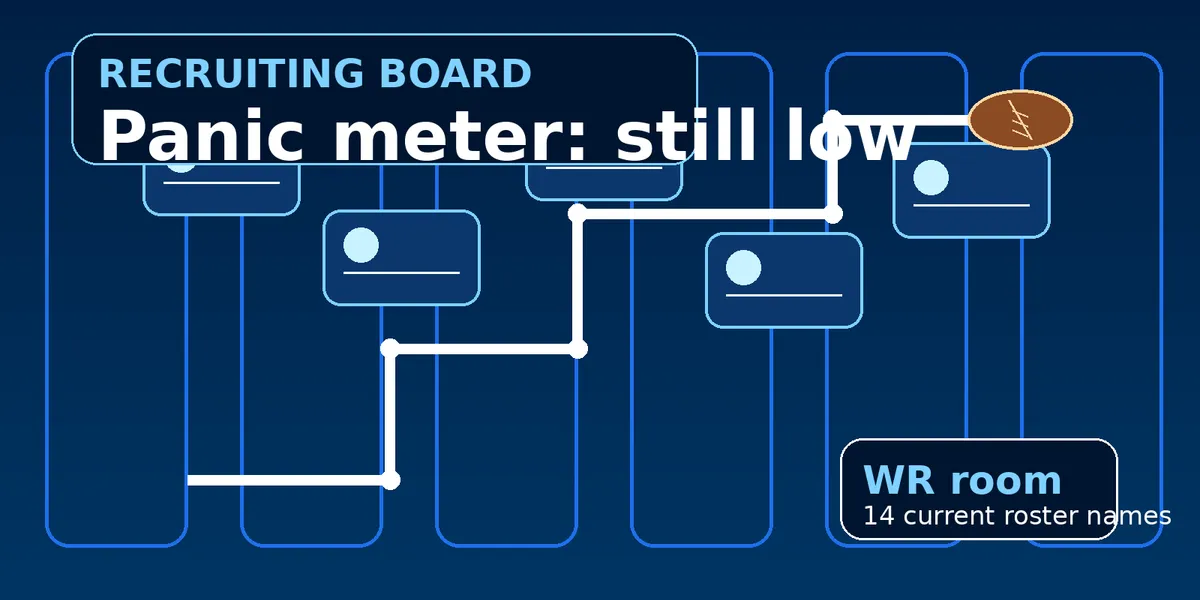
Second, the position fits BYU’s current roster timeline. The Cougars’ 2026 facts-only roster currently lists 14 wide receivers, with a spread that includes veterans such as Tiger Bachmeier, Cody Hagen, Jojo Phillips, Rowan Reay, and Kyler Kasper, plus younger names like Legend Glasker, Jett Nelson, Jaron Pula, and Terrance Saryon.
That is a healthy room for 2026. It is also a reminder that 2027 wide receiver recruiting is not about emergency patchwork. It is about succession planning.
Third, Wong’s commitment gives BYU a positive counterweight after the week became framed around misses. Recruiting coverage naturally overreacts to the most recent public yes or no. A miss can make a board look colder than it is; a commitment can make it look solved when it is not. The truth usually lives somewhere more boring and more useful: BYU is still building a class, and one receiver win is an important piece, not a parade permit.
Why the misses still matter
The Deseret News question is still worth taking seriously. BYU is in the Big 12 now, which means recruiting optics are not just local comfort food. They are conference positioning.
When a target such as Bode Sparrow becomes a public miss, it matters because BYU needs to keep proving it can win head-to-head battles in its footprint and beyond. The Cougars cannot live only on clever evaluations, mission-age patience, and late-cycle portal juggling. Those tools are still part of the BYU model, but the Big 12 tax is real: more verified size, more verified speed, more ready-made depth, and more recruiting wins that do not require a three-paragraph explanation.
That is why the right reaction is not dismissiveness. It is calibration.
A miss in June of a 2027 cycle is not a structural failure. A pattern of losing priority fits at premium positions would be. One good receiver commitment is not a full answer. A class that stacks multiple offensive playmakers, keeps local relationships warm, and adds defensive difference-makers would be.
BYU fans can hold both thoughts at once. This is legal in most counties.
The roster-context panic meter
Here is the practical board read after the Wong news and the recent miss conversation:
| Area | Panic level | BYU Sport Nuts read |
|---|---|---|
| Wide receiver | Low | Wong gives the 2027 class a public perimeter win, and the current roster is not in emergency mode. |
| Quarterback | Medium-low | The current QB room has five names, but BYU still needs a steady long-term recruiting/portal rhythm after the Jackson Doman release request became public. |
| Local footprint battles | Medium | Losing public priority names stings more in the Big 12 era because BYU needs visible proof it can keep winning relationships close to home. |
| Class optics | Medium | Early rankings are noisy, but fans are right to want momentum before the board becomes a scramble. |
| Program direction | Low | One week of recruiting headlines does not undo last season’s Big 12 credibility or the staff’s larger roster-building runway. |
The key word is runway. BYU does not need the 2027 class to look finished in late June. It needs the class to look coherent by the time summer decisions turn into fall visits and fall visits turn into signing-day math.
Why wide receiver is a useful place to start
Receiver is also a smart place for BYU to bank early belief because the offense’s 2026 story is already going to live under a microscope.
Bear Bachmeier will be one of the first names fans discuss heading into Big 12 Media Days and fall camp. The running game has an obvious veteran tone-setter in LJ Martin. The offensive line’s credibility will be a weekly topic because Big 12 games are often decided by whether your second-and-6 plan survives first contact.
Wide receiver recruiting sits right next to all of that. If BYU can sell a clear quarterback future, a physical run-game identity, and a path to catches in a competitive receiver room, then a 2027 wideout commitment becomes more than a star-count note. It becomes a proof point that the offensive pitch still travels.
That matters because BYU’s best recruiting pitch has always been more specific than generic facility talk. It is development, fit, culture, mission-age flexibility when relevant, family trust, and a chance to play meaningful football in a conference that no longer requires a geography lecture. The Big 12 gives the pitch more teeth. It also gives every miss more witnesses.
What has to happen next
Wong’s commitment should help BYU fans breathe. It should not make them nap.
The next checkpoints are straightforward:
- Stack another public win. One commitment changes the mood. Two or three start changing the board.
- Add trench credibility. Skill players make headlines; linemen make November tolerable.
- Keep the quarterback plan legible. After the Jackson Doman board reset, BYU needs both high-school evaluation and portal flexibility to feel intentional rather than reactive.
- Update the tracker honestly. The value of a recruiting tracker is not cheerleading. It is keeping fans oriented when headlines arrive in clumps.
The bottom line: BYU’s 2027 recruiting board had a week with enough turbulence to justify concern and enough good news to reject panic.
A four-star wide receiver commitment is not a magic eraser. It is a strong pencil mark on the class outline. BYU still has to fill in the heavy stuff — line bodies, defensive speed, quarterback clarity, and more public wins.
But for now, the Cougars have a useful receiver signal and a fan base that can put the panic meter back on the shelf.
Preferably a high shelf. Out of reach of Utah fans and toddlers.
Source links
- USA Today via Google News discovery: 2027 4-star WR Blake Wong commits to BYU
- Deseret News via Google News discovery: BYU whiffs on Bode Sparrow, is last in Big 12 recruiting for 2027. Time to panic in Provo?
- Sports Illustrated via Google News discovery: What to Make of BYU’s Recent Misses on the Recruiting Trail
- BYU Sport Nuts context: football recruiting tracker, football roster, football schedule, Jackson Doman quarterback-board reset
Want the recruiting signal without the siren? Join The Cougar Report.