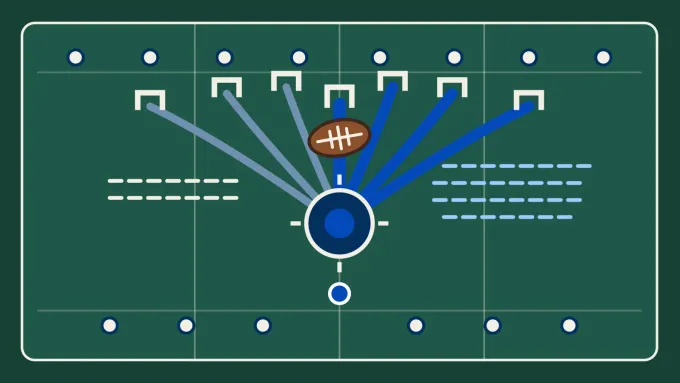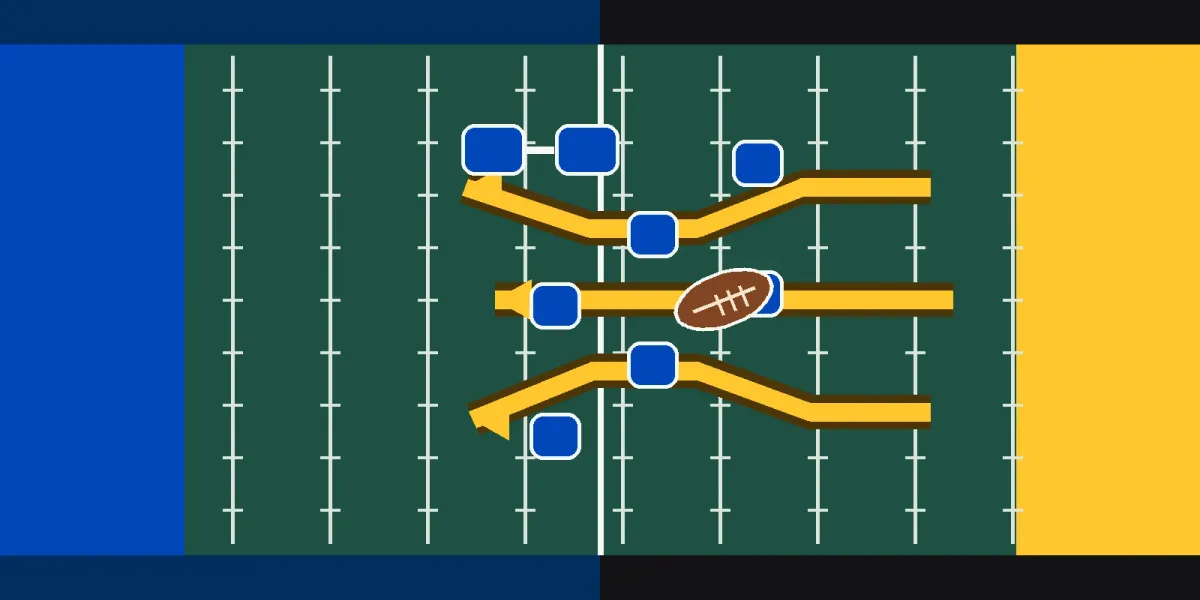
The roughing-the-kicker flag gave BYU fans one clean place to put their anger. UCF’s 179 receiving yards after the catch did not.
That second number should follow the Cougars into Arizona State week.
UCF threw for 293 yards in its 39-31 double-overtime win Saturday. According to Deseret News’ postgame reporting, 179 came after the catch. That is 61.1 percent of the Knights’ passing total, production created after the ball had already reached a receiver.
Some of it came from good spacing and speed. Too much came because BYU arrived without finishing. The most expensive example was Tyren Hornes’ 56-yard gain on third-and-17. Keyone Jenkins completed the short throw. Hornes supplied the rest while two tackle chances disappeared.
The disputed flag in the second overtime mattered. It did not create 179 yards, 26 first downs or 83 offensive snaps. If BYU wants the UCF loss to remain one bad Saturday, the repair starts before an official reaches for his pocket.
The 179-yard problem was bigger than one explosive play
Hornes caught six passes for 137 yards. An opponent-side breakdown credited him with 86 yards after the catch by himself. His third-and-17 conversion was the loudest example, but UCF kept finding smaller gains that turned catches into first downs or easier next plays.
The final receipt shows the accumulation:
| UCF offensive measure | Total |
|---|---|
| Passing yards | 293 |
| Reported yards after catch | 179 |
| YAC share of passing yards | 61.1% |
| Rushing yards | 170 |
| Total yards | 463 |
| Offensive plays | 83 |
| First downs | 26 |
| Third downs | 9 of 16 |
| BYU tackles for loss | 3 |
| BYU sacks | 1 |
The 179 figure needs one caution. It is not an official WMT field in the finalized team record, so it should not be treated as if the box score printed it. Deseret News reported it from the postgame, and Sports Illustrated’s UCF breakdown independently credited Hornes with 86 YAC. The official BYU and WMT records verify the surrounding totals: 25 completions, 293 passing yards, 170 rushing yards and 463 overall.
Those totals fit what the game showed. UCF did not live on a stack of low-percentage deep balls. Jenkins completed 25 passes, used quick access throws and repeatedly let the receiver solve the next defender.
That distinction matters. A defense can live with a well-covered 30-yard throw now and then. It cannot keep conceding five-yard completions that become 18, or a third-and-17 checkdown that becomes 56.
BYU lost the snap after the catch
The full UCF recap focused on volume: the Knights ran 15 more plays than BYU and held the ball for 32:35. Yards after the catch explain how UCF kept buying those snaps.
A missed tackle does more than add yardage. It changes the down sequence.
If Hornes is stopped near the catch point on third-and-17, UCF punts. Instead, his 56-yard gain moved the Knights to the BYU 15. Six runs later, Jenkins scored for a 24-21 lead. One unfinished tackle opportunity became a fresh red-zone series and seven points.
The same effect appeared late in regulation. With 30 seconds left, Landen Chambers caught a short pass on third down and gained 21 yards into BYU territory. UCF eventually missed its chance to win in regulation when Faletau Satuala blocked the field goal, but the completion had already forced BYU into another emergency.
BYU’s best defensive moments came at the end of problems. Raider Damuni made a touchdown-saving tackle in the second quarter. The Cougars stuffed fourth-and-goal at the 1. Satuala blocked the kick. Those plays deserve credit.
They also describe a defense working at the edge of the cliff.
The cleaner version ends the possession earlier. It tackles the checkdown. It gets off the field on third-and-long. It turns one of the batted passes into a takeaway instead of settling for a near miss.
The front and coverage share this bill
Poor tackling is easy to frame as a defensive-back problem. UCF made it larger than that.
The Knights ran for 170 yards, the most BYU had allowed in 13 games according to Deseret News. That forced linebackers and safeties to honor the run while Jenkins worked space around them. BYU recorded only three tackles for loss and one sack. The first defender often arrived without the pursuit arriving on time behind him.
Kalani Sitake did not blame one position group afterward. He pointed to technique and UCF’s skill in space, then said the Knights tackled better than BYU did. That is a sharper diagnosis than calling the loss a hangover or an officiating theft. UCF created difficult open-field assignments, and BYU did not complete enough of them.
The tackle itself is only the last frame. The work starts earlier:
- The front has to prevent a four-yard run from making every play call available.
- The underneath defender has to close without giving away an easy cutback lane.
- The pursuit angle has to remove the receiver’s second escape.
- The next defender has to arrive ready to finish, not watch the first collision.
UCF’s 83 plays wore on all four parts. The Knights ran 41 times and attempted 42 passes. BYU could not sit on one tendency, and the extra snaps kept testing the same open-field discipline.
That is why the turnover drought belongs in this conversation. BYU has forced one turnover across its last three games, the aborted Notre Dame spike recovered by the Cougars. Against UCF, several hands reached the ball and none completed the takeaway. Justin Kirkland and Ace Kaufusi nearly turned deflections into interceptions. Isaiah Glasker nearly produced a late fumble before replay ruled the arm moving forward.
Near takeaways do not shorten a drive. Finished tackles do.
Arizona State will test the same habit in a different shape
The Arizona State game center lists Saturday’s kickoff for 1:30 p.m. Mountain at LaVell Edwards Stadium on FOX. The Sun Devils arrive 4-3 after beating Kansas State 28-17.
Arizona State’s official recap put the ball at the center of that win: Cardae Mack scored all four Sun Devil touchdowns. The assignment will not look identical to UCF’s spread-and-run stress, but it asks the same basic question. Can BYU get the ball carrier on the ground when the first contact arrives?
Home field removes travel from the excuse list. It does not make the tackle.
BYU’s defensive season is still much larger than the Orlando film. The Cougars allowed 10 points at TCU and 10 against Iowa State, then held Notre Dame to 24. One bad game does not erase that work. It does expose the cost when tackling slips against Big 12 speed.
The response should be measurable Saturday:
| Defensive check | What improvement looks like |
|---|---|
| First contact | Short catches stay short instead of reaching the sticks |
| Third-and-long | Arizona State has to punt rather than escape underneath |
| Run support | The second defender closes before a crease becomes open field |
| Havoc | Pressures and tipped balls end in sacks, losses or takeaways |
| Snap volume | BYU avoids another 80-play defensive afternoon |
This is not a demand for a shutout. Arizona State has enough skill to win plays. BYU needs to stop turning a lost play into a lost series.
The penalty cannot become camouflage
The second-overtime flag deserves scrutiny. BYU appeared to force a field goal, Kendal Wall was called for roughing the kicker, and UCF used the new downs to score a touchdown and two-point conversion. Sitake disagreed with the call after the game.
Fans do not have to pretend the sequence was ordinary.
They also should not let it hide the rest of the afternoon. UCF reached the red zone six times, converted nine third downs and answered BYU’s first overtime touchdown in one play. The Knights did not need the flag to produce the first 31 points.
Blaming the call offers emotional relief and no coaching value. The 179 YAC offers the opposite. It is uncomfortable, specific and fixable.
BYU entered Orlando with a defense good enough to rescue games. It left with evidence that rescue mode cannot be the weekly plan. The Cougars do not need to win every snap against Arizona State. They need the tackle to end when contact begins, and the drive to end before another miracle is required.
Sources and further reading
- BYU Athletics: official UCF recap, official box score and stable event record 24746 for the final, drive sequence, player totals and completed status.
- WMT Statistics: UCF 39, BYU 31 for the finalized play count, passing and rushing totals, third downs, tackles for loss, sacks, red-zone trips and possession time.
- Deseret News: BYU defense after the UCF loss for the reported 179 yards after catch, three-game turnover note, 13-game rushing comparison and sourced postgame comments.
- UCF Athletics: double-overtime victory and Sports Illustrated’s opponent-side breakdown for Jenkins’ turnover-free game, Hornes’ role and the 86-YAC player figure.
- Arizona State Athletics: 28-17 Kansas State win for the Sun Devils’ current record, final and Cardae Mack’s four touchdowns.
- BYU Athletics: stable Arizona State event 24747 and official schedule for the Oct. 31 date, 1:30 p.m. Mountain kickoff, FOX assignment and LaVell Edwards Stadium venue.
- BYU brand colors and UCF Athletics’ school-color history for the verified palettes used in the original matchup art.
- BYU Sport Nuts: UCF recap, No. 8 poll analysis, Arizona State game center, football schedule and football results.