When BYU’s 1976 football team walks back into the stadium Saturday, it will not be there merely to fill a timeout with nostalgia.
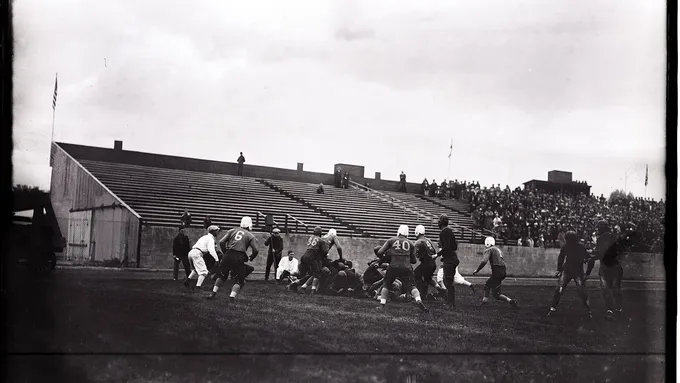
The Cougars will join the current team for the pregame Cougar Walk and help Light the Y before No. 15 BYU hosts Arizona at 1:30 p.m. Mountain on FOX. Fifty years ago, that group supplied the first full-season proof that LaVell Edwards’ pass-first offense could win a conference, travel and keep winning after opponents knew what was coming.
BYU finished 9-3, shared the Western Athletic Conference title and started a run of nine consecutive WAC championships. Quarterback Gifford Nielsen threw for 3,401 yards and 32 touchdowns while earning first-team All-America recognition.
Those numbers are impressive. Their place in the sequence is better. The 1976 team sits between BYU’s early experiments with an aggressive passing game and the quarterback line that eventually produced Jim McMahon, Steve Young, Robbie Bosco and Ty Detmer. This was the season the experiment became the program.
The 1976 season receipt
| 1976 marker | Result |
|---|---|
| Overall record | 9-3 |
| WAC record | 6-1, co-champion with Wyoming |
| Gifford Nielsen passing | 3,401 yards, 32 touchdowns |
| Arizona result | BYU 23, Arizona 16 |
| Utah result | BYU 34, Utah 12 |
| Bowl | Tangerine Bowl vs. Oklahoma State |
| What followed | Nine straight WAC titles, 1976-84 |
The bowl ended badly. Oklahoma State beat BYU 49-21 in the Tangerine Bowl, and Wyoming handed the Cougars their only conference loss. Remembering the season honestly makes its influence easier to see, not harder. BYU had not built a finished national power. It had found the operating system that would turn one good year into a decade of control.
Edwards had already won the WAC in 1974, but the 1976 offense arrived after he hired Doug Scovil as offensive coordinator. Nielsen told the Deseret News that the scheme resembled what would later be called the West Coast offense while most of college football still leaned on the veer and wishbone.
The useful distinction is not that BYU invented throwing the football. It did not. Edwards and Scovil committed to the pass as a weekly identity at a place without the recruiting advantages of a national blue blood. Precision, quarterback development and receivers who understood space became ways to change the talent equation.
That idea still explains BYU better than any single formation.
Arizona supplied the season’s defining finish
The anniversary lands on Arizona week for a reason.
On Sept. 25, 1976, BYU and Arizona were tied 16-16 in Tucson with seconds left. Nielsen escaped to his right and found George Harris for a 43-yard touchdown with three seconds remaining. The 23-16 win was the 200th victory in program history.
It also redirected a season that had opened with a 13-3 loss at Kansas State. BYU beat Colorado State the next week, then won at Arizona and shut out San Diego State 8-0. After the loss to Wyoming, the Cougars won six straight before the bowl.
That route matters more than a tidy anniversary slogan. The team being honored Saturday lost its opener, recovered on offense, won a one-score road game and survived a conference race with no margin for another league defeat. The nine-title streak did not begin with inevitability. It began with a team that had to repair its September.
BYU’s current Arizona game center carries a different kind of pressure. The 2026 Cougars are 1-0 after a 63-7 win over Utah Tech and have Big 12 evidence from last year’s 12-win season. They are not introducing the country to a strange offense from Provo. They are trying to convert an established identity into a Power Four conference title.
The old team cannot hand the new one a playbook shortcut. It can supply a standard for what happens after a useful idea becomes public knowledge.
The offense lasted because the teaching lasted
Passing attacks stop looking radical once everybody copies the spacing. BYU’s advantage lasted because the program kept developing quarterbacks who could run the system rather than hunting for one successor to Nielsen.
The line after 1976 is familiar: Marc Wilson, McMahon, Young, Bosco and Detmer. Different players brought different movement, arm strength and decision-making styles. The program kept the central demand intact. The quarterback had to process the defense, distribute the ball and carry a large part of the offense’s weekly burden.
That is why the 1976 group belongs in the same conversation as the 1980 Holiday Bowl and the 1984 national championship. The later teams reached higher peaks. The 1976 team proved the method could sustain winning.
Saturday’s quarterback, Bear Bachmeier, plays in a much less patient version of college football. Defensive coordinators disguise pressure, rosters turn over through the portal and one bad conference afternoon can wreck tiebreaker leverage. He also has tools the 1976 offense would recognize: play-action stress, throws that punish leverage and the freedom to make a defense wrong after the snap.
Our BYU-Arizona watch guide identifies the immediate test. Arizona made five sacks and 11 tackles for loss in its opener. BYU allowed one sack and one tackle for loss against Utah Tech. The Cougars need their passing game to stay available before obvious third downs invite the Wildcats to attack it.
The honor works because the current game carries weight
A reunion can turn into background noise when it is attached to a forgettable opponent or an empty late-season calendar. This one meets a live conference game.
BYU and Arizona are both 1-0. The winner begins Big 12 play with leverage, and the Cougars are trying to protect a home schedule that also brings Notre Dame, Iowa State and Baylor to Provo. The football schedule leaves little room for a ceremonial afternoon.
The pregame details are worth knowing. Deseret News reports that members of the 1976 team will participate in the Cougar Walk and Light the Y. BYU’s official game-week hub confirms the 1:30 p.m. Mountain kickoff on FOX.
Then the old team gets to watch the current one answer a familiar question: can BYU make the game look like BYU football when the opponent knows exactly what it wants to do?
The 1976 Cougars answered often enough to win a league and start a nine-year run. Saturday’s team does not need to recreate 1976. It needs to understand why that season earned a return trip to the field.
Sources and further reading
- Deseret News, Sept. 11: BYU will honor the 1976 team for the reunion plan, Nielsen’s account of the offense, season passing totals, Arizona finish and nine-title context.
- BYU Athletics: 2026 Arizona game-week hub for the official kickoff, FOX broadcast, game-day links and current matchup information.
- BYU Athletics: official Arizona game notes for current program records and the 2026 team context.
- Arizona Athletics: Arizona clashes with BYU for independent confirmation of the Sept. 12 matchup, records and series context.
- 1976 BYU season record for the game-by-game schedule, WAC standings and Tangerine Bowl result, compiled from contemporary newspaper records.