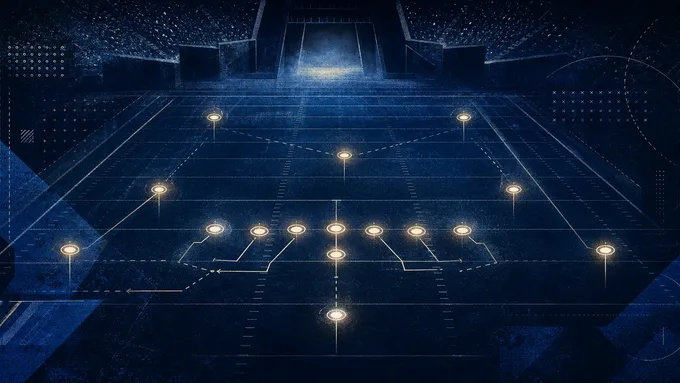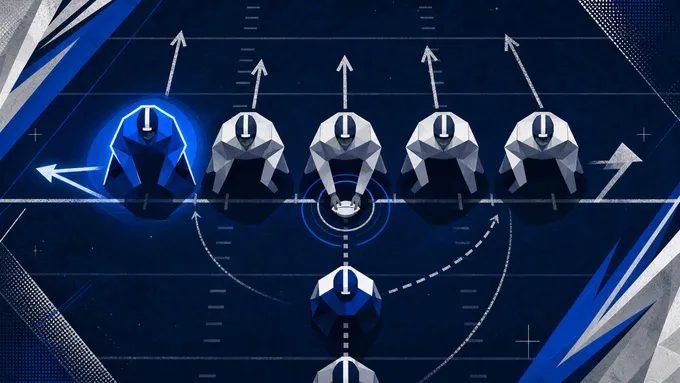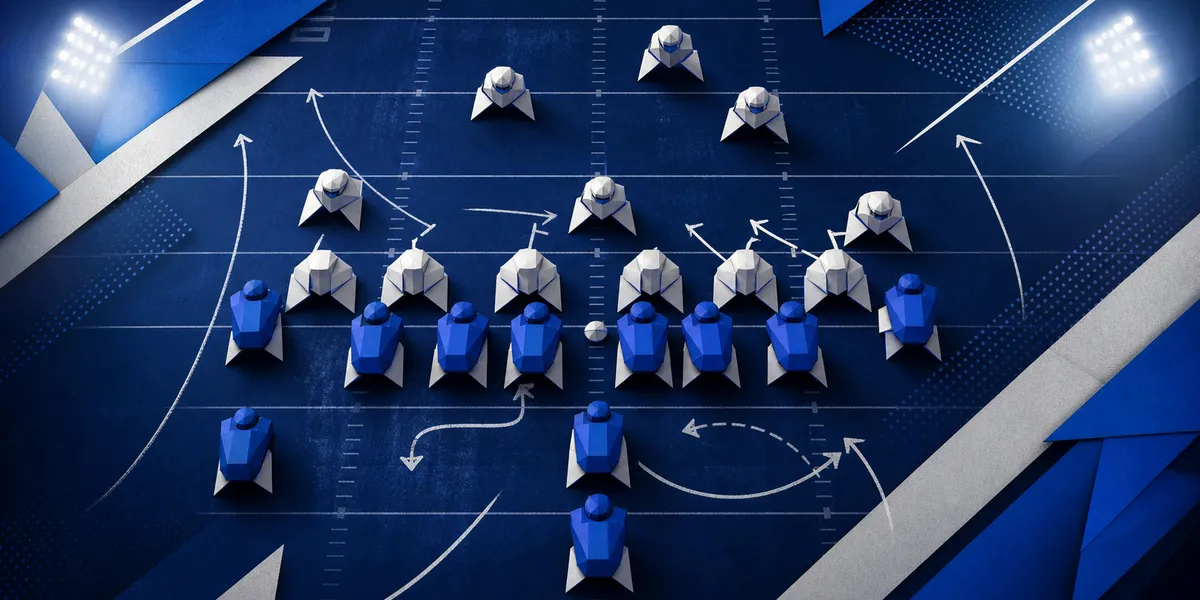
BYU spent the weekend getting treated like a real Big 12 adult.
That is nice. It is also dangerous.
The Daily Herald framed the Cougars’ Big 12 Media Days close as a positive-momentum moment. Sports Illustrated’s BYU site leaned into the idea that this team has fewer question marks than usual. USA Today’s preseason league work kept the broader Big 12 pecking order conversation alive. Around Provo, that all lands well because BYU fans have spent years asking for national respect and then pretending not to care once it arrives.
But respect in July is mostly a receipt. The football bill comes due up front.
If BYU is going to turn the “fewer questions” story into something sturdier, it starts at the line of scrimmage. Not with a slogan. Not with another podium answer about culture. With an offense that can block normal downs and a defense that can make Big 12 offenses uncomfortable without needing a magic trick every third snap.
The roster math says BYU has a real case. It also says the case is not finished.
The offensive line has inventory. Now it needs order.
The current BYU football roster lists 20 offensive linemen. That is a full room, and it is not just freshman optimism stacked in the back of the meeting room.
The class shape is useful: five redshirt seniors, two redshirt juniors, three redshirt sophomores, seven redshirt freshmen, plus three true freshman/sophomore bodies. BYU’s local stat database, built from official BYU/WMT source feeds, credits the offensive line group with 191 career games and 70 career starts.
That is the good news. The harder part is turning a large room into a settled one.
Bruce Mitchell is the cleanest symbol of what BYU wants this line to be. He is a 6-foot-4, 300-pound redshirt senior with 38 career games and 20 starts, and BYU is taking him to Big 12 Media Days with Bear Bachmeier, LJ Martin, Isaiah Glasker, Evan Johnson and Keanu Tanuvasa. That player list is not subtle. BYU is selling spine: quarterback, running back, center, linebacker, safety and defensive tackle.
Fine. Good spine. Now it has to hold.
The offensive line room has veteran starts from Mitchell, Kyle Sfarcioc and Andrew Gentry, plus older bodies like Sonny Makasini and Trevin Ostler. It also has younger developmental size, including Andrew Williams, the 6-foot-8 redshirt freshman who makes every offseason depth conversation a little more interesting than it needs to be.
The question is not whether BYU can name 20 linemen. The question is whether the staff can name the right eight or nine before the schedule starts throwing elbows.
Arizona comes in Week 2. TCU follows after Colorado State. Then Iowa State, Notre Dame, UCF, Arizona State, Utah, Baylor, Kansas and Cincinnati. That is not a gentle lab environment for a line still introducing itself.
If the Cougars are still shuffling in October, the depth chart becomes less like competition and more like a group project where nobody knows who brought the slides.
Bear Bachmeier’s season depends on boring first downs
Bear Bachmeier is going to get the quarterback attention because that is how this sport pays rent. The stat line is big enough to make the attention fair: 3,033 passing yards, 15 passing touchdowns, 527 rushing yards and 11 rushing touchdowns in the local database.
Still, BYU’s best Bachmeier season is not built on weekly rescue missions.
The line has to keep him out of bad math. Second-and-6 is a playbook. Second-and-12 is a stress test. Third-and-3 lets BYU use LJ Martin, tight ends, quarterback legs and tempo. Third-and-9 turns the Big 12 into a suggestion box for defensive coordinators with poor manners.
That is why the line conversation matters more than a normal July depth chart debate. Bachmeier is dangerous when his legs are part of the plan. He is less dangerous if his legs are the emergency exit. Martin is dangerous when his 2,541 career rushing yards and 23 rushing touchdowns come behind controlled downs and real lanes. He is less dangerous when every carry feels like he is being asked to win a traffic accident.
BYU does not need the offensive line to become a Joe Moore Award campaign overnight. It needs the room to be boring in the best way: fewer busts, cleaner communication, normal early-down wins, and enough playable bodies that one injury does not make the whole offense start speaking in fire-drill.
That is not glamorous. It is the difference between a quarterback carrying the offense and a quarterback operating it.
The defensive front has experience, but the edge still has to bite
BYU’s defensive-front math is interesting because it sounds strong and unfinished at the same time.
The roster has 11 defensive ends and nine defensive tackles, a clean 20-man front. The stat file credits that group with 243 career games and 84 starts. That is more than a warm body count. It is a real base.
The interior is where the experience is loudest. Keanu Tanuvasa brings 38 career games, 33 starts, 75 tackles, 16.5 tackles for loss and six sacks. Justin Kirkland has 43 games and 18 starts. Anisi Purcell adds 34 games and 17 starts. That is the kind of interior inventory that should let BYU line up without begging linebackers and safeties to fix every run fit.
The edge room is a different kind of bet.
Bodie Schoonover gives the group a senior anchor with 36 games and 10 starts. Hunter Clegg, Nusi Taumoepeau, Tausili Akana and Orion Maile-Kaufusi give BYU playable names with room to grow. The class distribution also gives the staff future inventory: five freshman/redshirt-freshman defensive ends and four sophomore/redshirt-sophomore ends.
That is healthy. It is not proof of pass rush.
The Big 12 is cruel to defenses that are only sturdy. If the front cannot create enough pressure, quarterbacks get comfortable, safeties get isolated, and fans start diagnosing coverage from the couch with the confidence of people who have never had to cover a slot fade. BYU does not need 50 sacks to be credible, but it does need offenses to feel the edge before the ball is already gone.
That is why the recent Uhila Wolfgramm recruiting buzz fits the bigger story. A 2027 commitment cannot help this season. It can, however, show that BYU knows where the league’s roster tax is going to keep coming due: edge traits, defensive-front length, and enough pressure players to make the future less dependent on one guy becoming a miracle.
The real line-of-scrimmage report card
Here is the test I would use before buying the July optimism wholesale.
Can BYU get through the first month with an offensive line rotation that feels intentional? If the Cougars know their best five, trust three or four more, and protect Bachmeier from constant obvious passing downs, the offense has a chance to look mature before the schedule gets mean.
Can the interior defensive line hold up without constant help? Tanuvasa, Kirkland and Purcell give BYU enough experience to ask that question seriously. If they can keep linebackers clean, Isaiah Glasker becomes more than a cleanup man. He becomes a problem.
Can the edge room make quarterbacks hurry? This is the one that probably decides whether BYU’s defense feels merely experienced or actually annoying. Experienced defenses can still get picked apart. Annoying defenses ruin timing.
And can the roster stay healthy enough that all this depth matters? Every team says it has depth in July. September and October are when the sport starts asking for receipts.
What BYU has to prove now
The positive BYU talk is not fake. A roster with 116 players, 21 seniors or redshirt seniors, a returning quarterback with production, an experienced center, a veteran running back and a defensive spine deserves a grown-up conversation.
The problem is that grown-up conversations come with grown-up questions.
For BYU, the question is whether the trench numbers are just comforting or actually useful. Twenty offensive linemen sounds good. Twenty defensive-front players sounds good. A combined 40 trench players, 434 career games and 154 starts sounds even better.
But the Big 12 does not award points for sounding good in a spreadsheet.
BYU’s credibility test starts with the stuff fans notice only when it goes wrong: protection calls, double teams, gap fits, edge contain, short-yardage push, third-and-manageable. If those pieces are solid, Bachmeier gets to be a quarterback instead of a weekly escape artist. Martin gets to be a weapon instead of a battering ram. The defense gets to be aggressive instead of reactive.
That is the version of BYU that can make the July respect look reasonable.
If the line play wobbles, the rest of the roster can still have nice players and long Saturdays. The Big 12 has a gift for finding the soft spot and poking it until everyone in the stadium knows exactly where it is.
So yes, enjoy the positive momentum. Save a little skepticism for the first real third-and-2.
That is where the season will start telling the truth.
Source links
- Google News discovery: Big 12 Media Days: BYU football ends the two-day media event with a lot of positive momentum — Daily Herald
- Google News discovery: BYU Has Fewer Question Marks Than Ever Going Into Big 12 Media Days — Sports Illustrated
- Google News discovery: Big 12 football predictions, preseason awards, all-conference teams — USA Today
- Google News discovery: Uhila Wolfgramm’s speed and size give BYU’s defense a big boost — Deseret News
- Official BYU Athletics: BYU football roster
- Official BYU Athletics: BYU football schedule
- Official BYU Athletics API source used by BYU Sport Nuts: 2026 football roster data
- WMT/BYU stat source used by BYU Sport Nuts: BYU football stats widget
- BYU Sport Nuts context: football hub, football roster, football schedule, Big 12 standings, recruiting tracker, three-proofs season check, Athlon respect test, Bruce Mitchell center-standard analysis, Andrew Williams line-depth analysis
Want BYU football context without the message-board smoke machine? Join The Cougar Report.