The scariest player on a football field is not always the one with the most complicated scouting report. Sometimes it is the one who makes the report one sentence long: do not let him get the corner.
That is why the latest USA Today/Google News preview item on Kansas running back Dylan Edwards belongs on BYU fans’ offseason radar. BYU’s Nov. 21 trip to Kansas sits after the Holy War and Baylor, one week before Cincinnati, and it has all the ingredients of a classic late-Big-12 trap: road legs, cold-weather weirdness, and an opponent with a speed threat capable of making one bad angle feel like a tax audit.
This is not a prediction column. It is too early for that, and anyone pretending late-November game flow is knowable in June is either selling something or has been alone with a depth chart for too long.
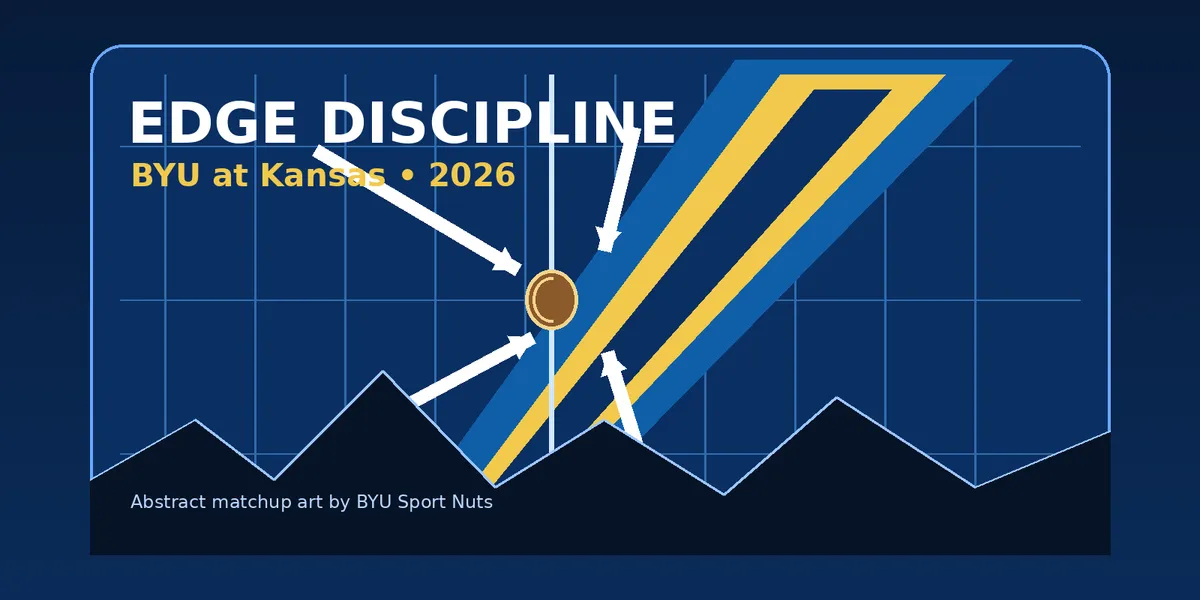
But it is fair to say this: Kansas is a clean edge-discipline exam for BYU’s defense. If the Cougars want to stay in the Big 12 conversation deep into the season, this is the kind of matchup they have to handle without turning ordinary perimeter plays into fireworks.
Why Edwards changes the shape of the Kansas week
A back like Edwards stresses more than the box count. He stresses spacing.
BYU can fit the inside run correctly, be aligned before the snap, and still be wrong if the force defender is late, the corner gets pinned, or the safety takes a heroic angle that becomes a cautionary tale. The danger is not merely four yards becoming eight. It is eight becoming 48 because the defense lost leverage by half a step.
That is the specific reason the Kansas game deserves an early bookmark on the BYU football schedule. The Cougars will see bigger brands and louder environments. Kansas asks a narrower question: can BYU keep speed boxed in when the field wants to stretch sideways?
For a defense with Big 12 ambitions, that question matters.
BYU has the bodies. The test is the fits.
The facts-only BYU football roster shows enough defensive volume to make this a fair test rather than a depth-chart panic. BYU currently lists 11 defensive ends, nine defensive tackles, 14 linebackers, 10 safeties, and nine cornerbacks. That does not automatically stop a speed back. It does mean the Cougars are not asking one position group to hold the dam with a clipboard.
The Kansas matchup should put the spotlight on the players who turn scheme into boundaries:
| BYU defender | Position | Why Kansas matters |
|---|---|---|
| Bodie Schoonover | Defensive End | The edge has to squeeze without getting too far upfield and donating a cutback lane. |
| Isaiah Glasker | Linebacker | BYU’s veteran second-level presence has to turn speed stress into routine tackles. |
| Raider Damuni | Safety | Safety angles become the emergency brake when perimeter runs leak. |
| Evan Johnson | Cornerback | Corners do not get to be spectators against speed; force and tackling are part of the job description. |
| Keanu Tanuvasa | Defensive Tackle | Interior push matters because clean edges get harder when the inside run is also available. |
The career-stat layer adds useful context. Glasker enters with 140 career tackles, 23 tackles for loss, 6.5 sacks, and five interceptions in the BYU Sport Nuts player database. Damuni has 90 career tackles. Johnson has 65 tackles, seven interceptions, and 10 pass breakups. Schoonover brings 36 games played, 44 tackles, seven tackles for loss, and three sacks.
Those are not magic numbers. They are receipts that BYU has veteran defenders who have been in enough live traffic to understand that the boring tackle is often the winning tackle.
The mistake BYU cannot make
The obvious answer to a speed back is to “run to the ball.” That is also how defenses sometimes create the exact runway they were trying to close.
Against Kansas, BYU’s biggest mistake would be over-pursuit dressed up as effort. If the first wave runs past the play, the second wave is suddenly tackling in space. If the safety arrives too flat, the cutback becomes a sermon. If the edge defender loses contain because he wanted a highlight, congratulations, everybody gets to watch the replay from three angles.
The Cougars do not need superhero football in Lawrence. They need assignment football with enough violence to finish.
That means:
- Set the edge before chasing. Make Kansas win inside the structure, not outside it.
- Tackle through the near hip. Speed becomes less scary when defenders arrive under control.
- Make second-and-long real. A speed back is most dangerous when the offense can call anything.
- Do not let one explosive play become three. Late-season road games punish emotional carryover.
The last point is not tactical fluff. BYU’s 2026 schedule stacks stress in November: at Utah, Baylor at home, at Kansas, Cincinnati at home. One bad quarter in that stretch can change the tone of the month.
The offense has a role, too
A perimeter-speed game is not only a defensive problem. BYU’s offense can help by keeping Kansas from living in comfortable script.
That starts with the Cougars’ own run-game spine. LJ Martin enters with 482 career rushing attempts, 2,541 rushing yards, and 23 rushing touchdowns in the local database. Bear Bachmeier brings quarterback mobility on top of his passing profile. Bruce Mitchell gives BYU an experienced offensive-line reference point with 38 games played and 20 starts.
If BYU can stay patient offensively, it changes the Kansas game. Longer drives mean fewer chances for Edwards-style explosives. A manageable scoreboard means the defense can keep its structure instead of gambling. Field position means Kansas has to earn the long way rather than receiving short-field gifts like a neighborhood casserole.
Complementary football is not a cliché here. It is the easiest way to keep a speed matchup from becoming a track meet.
The fan checklist for Nov. 21
When BYU week finally turns to Kansas week, watch these five items before getting hypnotized by the ball:
- Where is BYU’s force defender? If the edge is cloudy, the whole defense gets nervous.
- How deep are Glasker’s tackles? Two-yard stops and seven-yard stops live in different worlds.
- Are safeties arriving square? Damuni and the back end must erase space without creating cutback lanes.
- Can BYU avoid cheap offensive three-and-outs? A rested defense tackles speed better than a gasping one.
- Does Kansas get explosives early? The first long run often changes how aggressive both teams feel.
The takeaway
Kansas is not just another road line on the schedule. It is a late-November test of whether BYU can keep a dangerous runner from bending the game sideways.
The Cougars have the veteran pieces to answer: Glasker in the middle, Damuni and Johnson on the back end, Schoonover and Tanuvasa helping define the line of scrimmage, and an offense with Martin’s physicality to protect the defense from possession overload. The unknown is whether all those pieces stay disciplined when the ball hits the edge and the grass suddenly looks very large.
That is why this matchup is worth circling now. Not because Dylan Edwards alone decides BYU’s season, but because players like him reveal whether a defense is merely athletic or actually trustworthy.
Trustworthy defenses make speed earn every inch. BYU will need that version in Lawrence.
Source links
- USA Today/AOL via Google News discovery: BYU football game plan target — Dylan Edwards, Kansas Jayhawks
- Official BYU Athletics schedule source used by BYU Sport Nuts: BYU football schedule
- BYU Sport Nuts context: football schedule, how to watch BYU at Kansas, football roster, BYU at UCF run-defense preview
Want the late-season schedule tells before they become everybody’s talking points? Join The Cougar Report.